Back, neck, shoulders
Sitting all day? Your back is talking to you.
You do not need to be in agony to see a physiotherapist. We ease the pain, then give you what you need so it does not come back on Monday.

Three things to do at your desk, starting today
Stand up every hour
A coffee, a call on your feet, a walk to the window. Moving often beats sitting perfectly.
Screen at eye level
A pile of books under the laptop, a separate keyboard: the neck thanks you by evening.
Roll your shoulders
Ten slow circles backwards, twice a day. Thirty seconds, no gym needed.
General advice, not a treatment. If the pain lasts, comes with numbness or wakes you at night, see your doctor.
State-registered physiotherapists
Every physiotherapist of the practice holds the state diploma and is registered with the professional order.
An assessment first
The first appointment starts with an assessment: what hurts, since when, what you can no longer do. The plan comes from there.
Your physiotherapist, for you alone
During your session, your physiotherapist looks after you and nobody else. No machine left running while they treat the next patient.
Health insurance and top-up cover
With your prescription and your health card, we handle the paperwork. We work with the national health insurance.
What we treat
We do not promise a cure: we set goals with you, measure them and tell you honestly where you stand.

Low back pain
Acute or long-standing back pain: understand it, move again, and keep the exercises that stop it coming back.
Back & joints

Knee rehabilitation after surgery
After a ligament repair or a knee replacement: bend, straighten, walk, then climb stairs again, stage by stage.
After surgery

Shoulder rehabilitation
A painful or stiff shoulder, a tendon problem or an operation: raise your arm again without the pain.
After surgery

Ankle sprain
Walk normally again, then trust your ankle again: balance work so it does not give way twice.
Sport
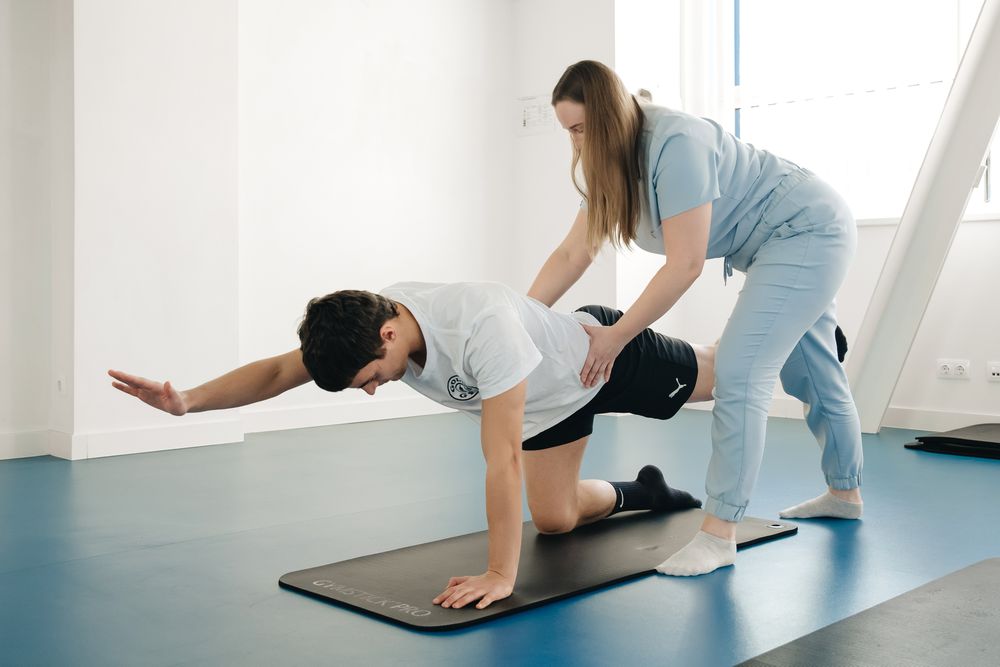
Return to sport
After an injury, the stages that take you from the treatment table back to training, then to competition.
Sport

Neck pain
A stiff neck, headaches from tension, pain after a long day at the screen: ease it, then prevent it.
Back & joints
A first session, without surprises
You book
By phone or with the form. Tell us the reason and whether you have a prescription.
We assess
Questions, movements, tests: we look at what hurts and what you need to get back to.
We set goals together
Climbing stairs, picking up a child, running again. Concrete goals, shared with your doctor if needed.
You work between sessions
A few simple exercises to do at home. That is often where progress is made.
What to bring to the first session
- Your prescription
- Your health card and top-up insurance certificate
- X-rays, scans or surgery report, if you have them
- Comfortable clothes or shorts, and a towel
They came between two meetings
"Six weeks after my knee surgery I was walking without crutches. Every session started with what I could do the day before."
"I came for my back, I left with five exercises I still do every morning. And explanations, at last."
"My mother is 84. The physiotherapist comes to the house twice a week, and she goes down the stairs on her own again."
Your questions before a first session
Do I need a prescription?
How are sessions reimbursed?
What should I bring to the first session?
How many sessions will I need?
Do you come to the house?
What if I have to cancel?
Book an appointment
Tell us the reason and your availability. The practice calls you back to set the first session.
Rather call? The practice answers on01 23 45 67 89
Opening hours
- Monday to Friday
- 8 a.m. – 8 p.m.
- Saturday
- 8 a.m. – 12 p.m.
- Sunday
- Closed
Home visits on prescription, in the mornings. Cancel at least 24 hours ahead, please: the slot goes to someone else.